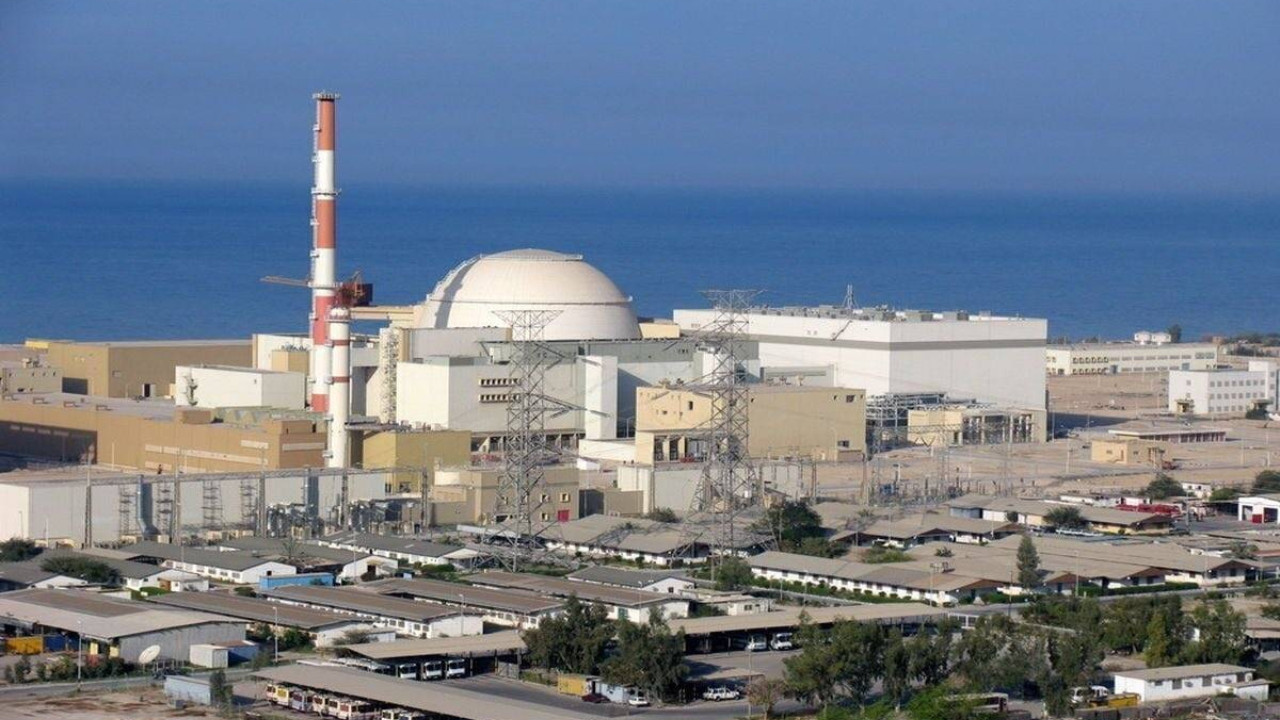
The United States and Israel have launched an attack near Iran's Bushehr nuclear power plant. (Image X @Shank__exe)
Tehran: The United States and Israel have launched an attack near Iran's Bushehr nuclear power plant. The attack resulted in the death of a security guard and caused damage to one of the plant's buildings. However, the core section of the plant remains intact, and its operations have not been affected.
This marks the fourth time the plant has been targeted during the ongoing conflict. Consequently, concerns regarding the security of the nuclear facility and the risk of radiation exposure are mounting. The International Atomic Energy Agency (IAEA) has issued a statement expressing its concern over the incident.
According to the Iranian news agency Tasnim, a missile struck near the outer perimeter of the Bushehr nuclear power plant early Saturday morning. The strike resulted in the death of a security guard and caused damage to an auxiliary building within the facility. Bushehr is situated on the coast of the Persian Gulf in southern Iran and serves as the country's first commercial nuclear power plant.
In a statement released on Saturday afternoon, the IAEA confirmed that it had received information from Iran indicating that a projectile had landed near the complex of the Bushehr Nuclear Power Plant (NPP). A member of the site's physical protection staff was killed by shrapnel from the projectile, and a building located on the site sustained damage. While there have been no reports of any increase in radiation levels, the fact that this marks the fourth such incident in recent weeks has heightened concerns.
IAEA Director General Rafael Grossi expressed deep concern over the incident, stating that nuclear power plant sites—or their immediate vicinity—must not be targeted in attacks. He noted that auxiliary buildings at such sites may house essential safety-related equipment. Grossi emphasized the need for the utmost military restraint to prevent the risk of a nuclear accident and radiation exposure. He added that adherence to the "Seven Pillars" of nuclear safety and security is absolutely critical during any armed conflict.
Recent developments suggest that the conflict in Iran—which has been ongoing since February 28—is intensifying. U.S. President Donald Trump has issued warnings of potential attacks targeting Iran's infrastructure, including bridges and power plants. The United States is, in fact, already carrying out severe attacks on Iran's infrastructure. Consequently, the scale of destruction could escalate in the coming days.
Delivering a significant blow to the United States, Iran shot down two of its fighter jets this week. However, U.S. President Donald Trump asserts that this will make no difference. Commenting on the incident, he stated, "We are at war." Trump added that the destruction of the military aircraft would have no bearing on diplomatic discussions with Iran.
Expressing anger over Trump's rhetoric, Iran has declared that if its bridges, power plants, and energy infrastructure are destroyed, it will respond with severe retaliation. Iran has issued a warning of attacks—targeting the infrastructure of the United States and Israel—as well as that of those Gulf nations that have hosted U.S. military bases.




Copyright © 2026 Top Indian News